
3 Myths About Swimmer's Shoulder That Are Costing You Recovery Time
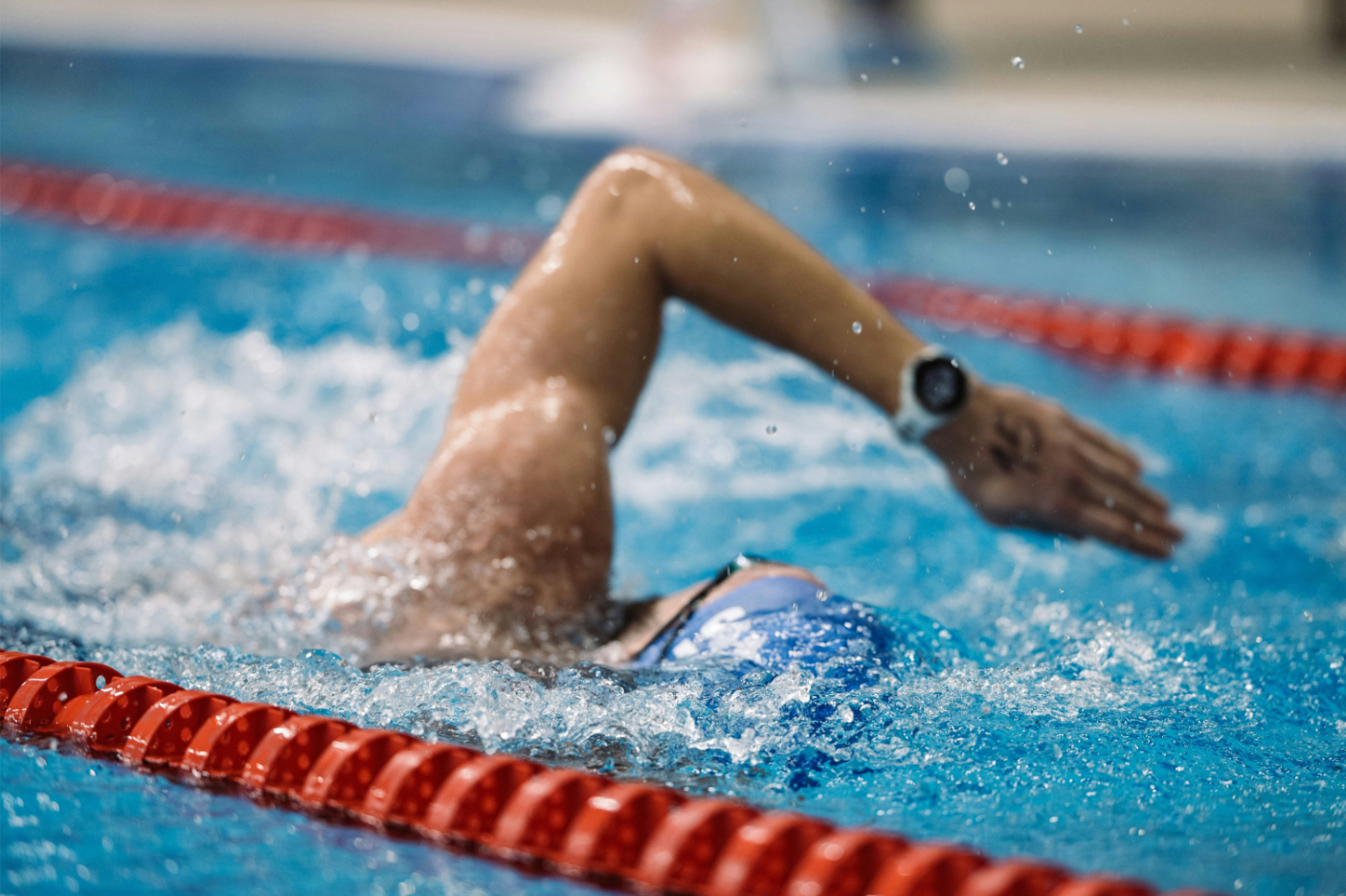
Rest it. Stop training when it hurts. Stretch it out. These are the three most common responses to shoulder pain in swimmers. Each carries some truth in the right context. The problem is how often they get applied as defaults rather than as conclusions from a proper assessment.
With SNAG, NSG and SNSC ahead, now is a good time to examine what the evidence actually says about each one.
Myth 1: Rest Is the Best Treatment for a Sore Shoulder
Short-term load reduction has a legitimate place in the first few days of an acute flare. That is different from complete rest lasting weeks.
Tendons and muscles do not recover well in the absence of load. Research on tendon rehabilitation consistently shows that graded mechanical loading is one of the primary drivers of tissue repair (Silbernagel et al., 2001). When a swimmer stops training entirely, the shoulder loses conditioning, the surrounding musculature weakens, and when training resumes the same structure is asked to absorb the same load that irritated it in the first place. The cycle repeats.
The more productive question is not whether to rest completely, but what can be safely loaded right now. In most cases swimmers can remain in the water with stroke modifications and volume reduction while a targeted rehabilitation programme runs alongside. The goal is to maintain fitness and conditioning while giving the irritated tissue the right environment to recover.
Myth 2: Pain During Training Means Stop Completely
Pain is information, not a stop sign. The question is what kind of information it is carrying.
Not all pain during training carries the same meaning or the same risk. A useful clinical framework is to assess it across three dimensions.
Pain intensity during the session. Low-level discomfort that stays the same or reduces during warm-up is generally safe to train through with modifications. Pain that spikes during the session and does not settle warrants stopping that particular activity.
Pain behaviour after the session. A shoulder that settles within a few hours of finishing training is generally tolerating the load. A shoulder that is still sore more than 24 hours later is telling you the load exceeded what it can currently handle.
Week on week trend. A shoulder that is gradually becoming easier to train through is moving in the right direction. A shoulder where the same load produces more pain over time needs to be reassessed.
“The 24-hour rule is a practical and clinically grounded benchmark. If the shoulder has settled by the following morning, the load was tolerable. If it has not, reduce the load until it does.”
Myth 3: More Flexibility Equals a Better Stroke
Shoulder pain in competitive swimmers is common, with some studies reporting prevalence as high as 91% in adolescent swimmers (Feijen et al., 2020). Despite this, flexibility is often the first thing addressed when a swimmer's shoulder becomes problematic. The assumption is that more range of motion leads to a better stroke and a healthier shoulder. The evidence does not reliably support this.
Adding passive flexibility without the strength and neuromuscular control to use it increases instability at the glenohumeral joint. The most clinically relevant modifiable risk factor in swimmer's shoulder appears to be shoulder strength endurance, not range of motion (McKenzie et al., 2023).
There is an important distinction here. Some swimmers genuinely lack the specific range of motion required for a good high elbow catch. In isolation, most competitive swimmers have adequate shoulder abduction and internal rotation. Where it breaks down is when both are assessed together in the combined position the catch actually demands. These restrictions are worth addressing. But this is different from generic shoulder stretching prescribed without an assessment, which often adds passive range without building the strength and control to use it.
If a swimmer has had their flexibility addressed and their stroke still breaks down at high mileage, the limiting factor is almost always muscular endurance and neuromuscular control, not range of motion.
The Pattern Across All Three
Rest, pain avoidance and flexibility are not wrong as concepts. Short rest is appropriate for acute flares. Pain is a signal worth respecting. Flexibility matters where a genuine restriction exists. The problem is applying them as blanket responses without understanding the specific presentation of the individual swimmer. What each of these myths has in common is that they offer a simple rule where the clinical reality requires an assessment.
Shoulder been niggly through training and not sure why it is not improving? A physiotherapy assessment will identify the specific structure involved, what is aggravating it, and the most direct route back to full training.
-
1. Adolescent swimmer shoulder pain prevalence systematic review
Feijen S, Tate A, Kuppens K, Claes A, Struyf F. Swim-training volume and shoulder pain across the life span of the competitive swimmer: a systematic review. J Athl Train. 2020;55(1):32-41. PMID: 31935141.
2. Graded loading and tendon rehabilitation
Silbernagel KG, Thomee R, Thomee P, Karlsson J. Eccentric overload training for patients with chronic Achilles tendon pain: a randomised controlled study with reliability testing of the evaluation methods. Scand J Med Sci Sports. 2001;11(4):197-206. PMID: 11476429.
3. Shoulder strength endurance as primary modifiable risk factor
McKenzie A, Larequi SA, Hams A, Headrick J, Whiteley R, Duhig S. Shoulder pain and injury risk factors in competitive swimmers: a systematic review. Scand J Med Sci Sports. 2023;33(12):2396-2412. PMID: 37515375.
MEET THE AUTHOR

YU HENG CHIN
Physiotherapist & Performance Coach
SPECIALISATIONS
Sports Physiotherapy
Musculoskeletal & Post-operative Rehabilitation
Chronic Pain & Injury Prevention
TPI Certified Golf Screening & Performance Optimisation
Youth Strength & Conditioning
Personal Training
Sports Massage, Dry Needling, Shockwave Therapy
