
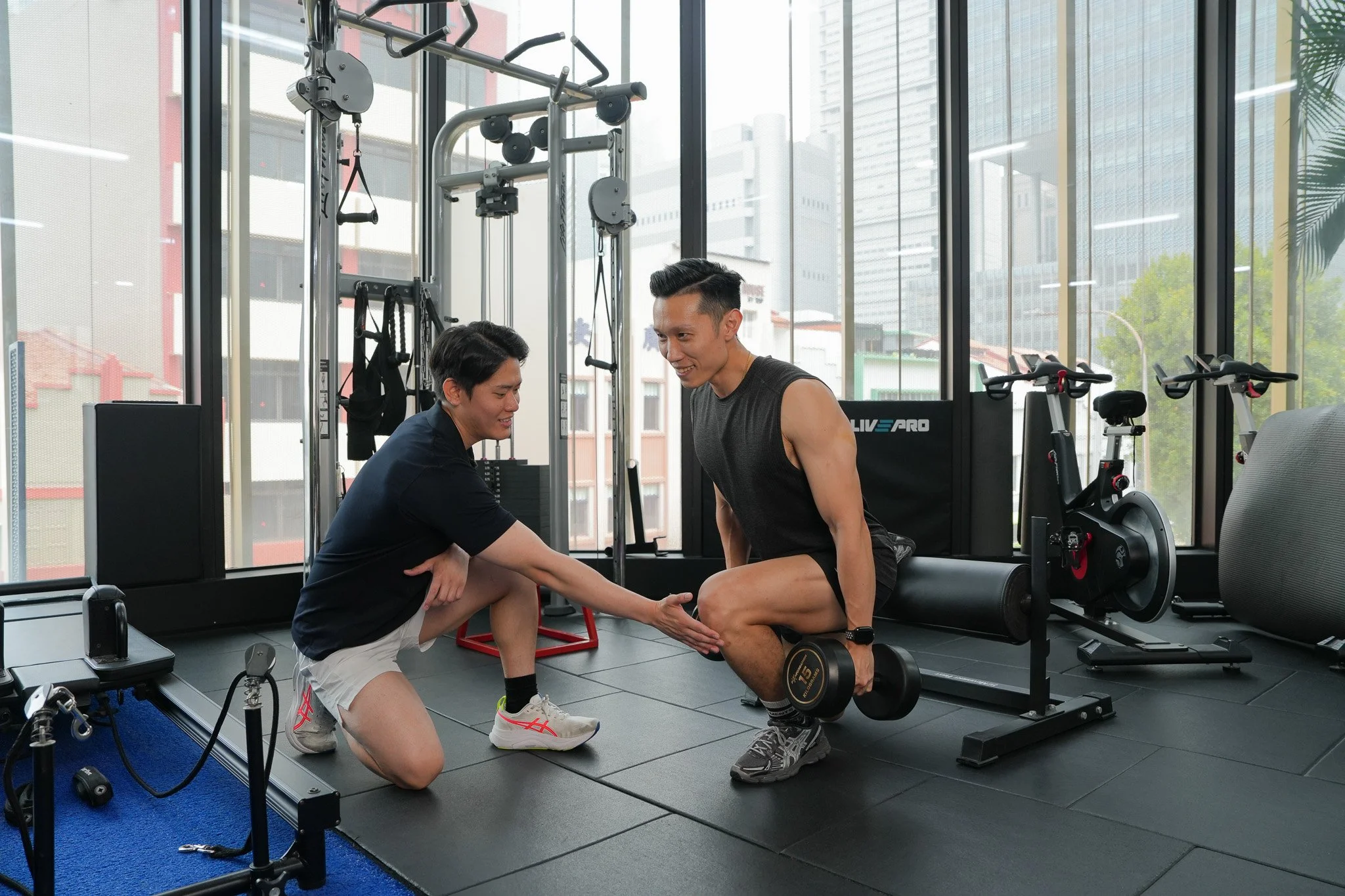
Twelve weeks after ACL reconstruction doesn’t automatically mean you’re ready to run.
Your graft type, how well you’re healing and any other procedures done during surgery all matter. Even so, the decision to start running should rest on how your knee is actually performing, alongside a sensible timeline, not on the calendar alone.
At a glance: is your knee ready to run?
Before you head out for that first run, check that:
Range of motion: your knee straightens fully and bends to at least 95% of your other knee.
It’s “quiet”: little or no swelling, and no flare-up the morning after exercise.
Strength: your thigh muscles (quads) are at 80% or greater of your other leg’s strength (your LSI).
Jumping and hopping: you can jump well and hop repeatedly on one leg without pain.
Impact tolerance: your knee copes with repeated landings, not just a single hop.
Confidence: you feel ready, not just physically but mentally (we check this with short questionnaires and a conversation).
Keep reading for what each of these means and how we check them.
Watch the above video for Part 1
1. Why 12 Weeks Isn’t the Magic Number
You’ll often hear 12 weeks quoted as the point to start running again. Where does that number come from?
A review of the research by Rambaud and colleagues (2018) found that 12 weeks was the most common timeframe used for returning to running, yet only 18% of studies used performance-based criteria to make the decision [1]. A 2026 survey of 177 clinicians found wide differences in when and how they decide someone is ready to run [2].
Two people can both be 12 weeks post-op and look completely different. One may have good strength, a fully straight knee and a solid tolerance for impact exercises. The other may still have weak thigh muscles, a knee that won’t fully straighten, or swelling after rehab sessions.
So is running at 12 weeks wrong? Not necessarily. The problem is using time as the only measure.
The 2023 Aspetar clinical guideline makes the same point: rehab should progress based on physical and psychological criteria, with time since surgery treated as necessary but not enough on its own [3]. Instead of counting weeks, the real question is whether your body, and your confidence, are ready for running.
2. What We Check Before You Run
A. Range of motion
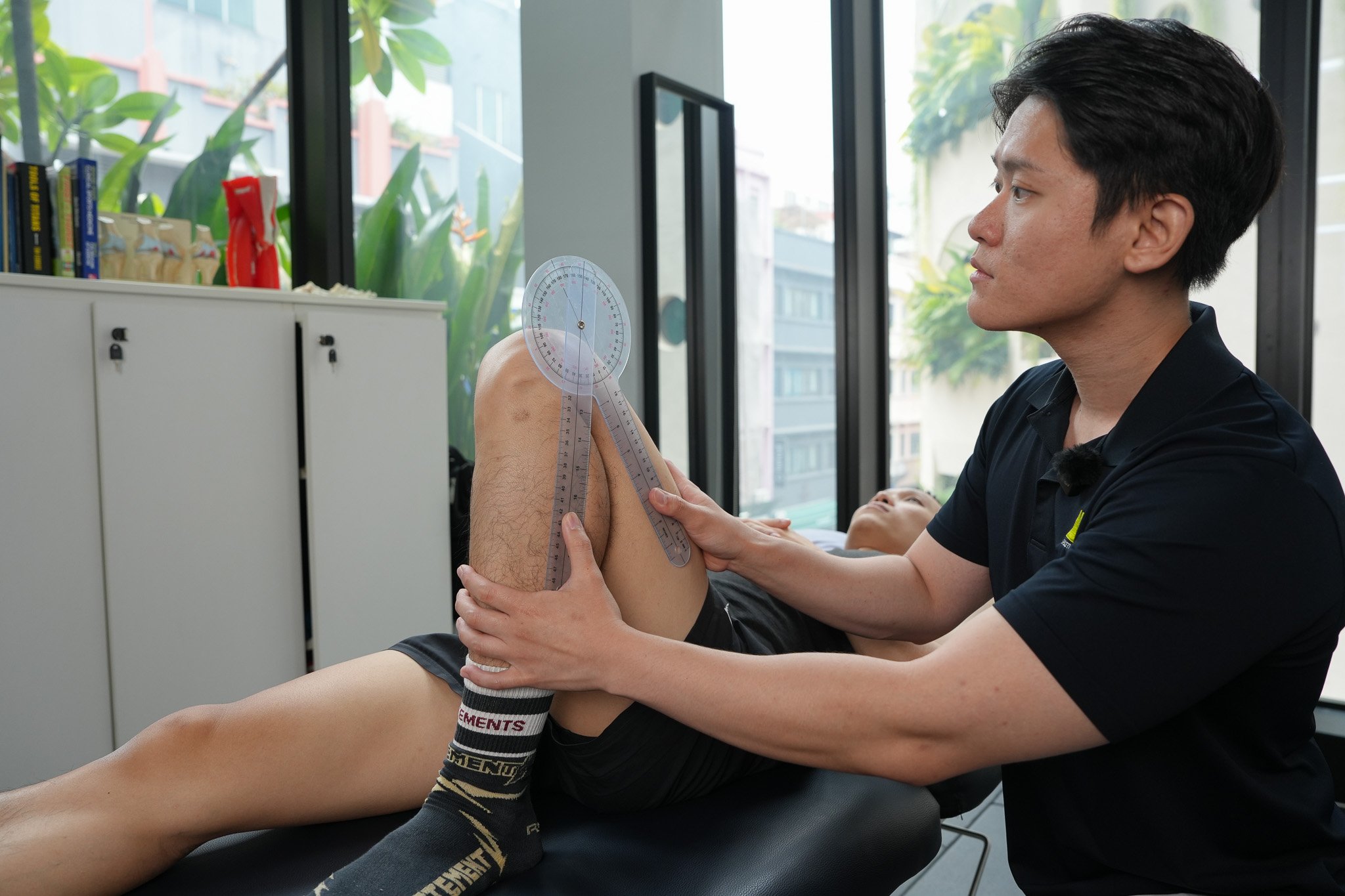
Getting your knee fully straight and bending well matters for running and for everyday life. The Aspetar guideline recommends full knee extension (straightening) and at least 95% of your normal bend compared with your other knee before returning to running [3].
B. Is your knee “quiet”?
A quiet knee has little pain, little swelling and copes well with what you’re currently asking of it. Clinicians often check for swelling with the Sweep Test, a simple hands-on test that looks for fluid around the kneecap. The guideline suggests no more than a “trace” [3].
We look at how your knee behaves during exercise and again the next morning. If rehab felt fine but you wake up with more swelling or stiffness, your knee is telling you the load was too much, too soon.
C. Strength
Your quadriceps (the big muscles at the front of your thigh) help control how your knee bends each time your foot hits the ground. They can stay weak even when daily life feels comfortable.
One common way to measure this is the Limb Symmetry Index (LSI), which compares the strength of your operated leg with your other leg as a percentage. If your operated leg produces 80 kg of force and your other leg produces 100 kg, your LSI is 80%. The Aspetar guideline proposes an LSI of 80% or greater as one consideration for returning to running [3].
There’s a catch. Research by Wellsandt and colleagues (2017) showed that this kind of comparison can make recovery look better than it is, because your “good” leg can lose strength too after a period of reduced activity [4]. That’s why we also look at how strong each leg is in absolute terms, not just how they compare.
D. Jumping and hopping tests
Being strong in a single-muscle test doesn’t automatically mean you’re ready to run. Running is a movement made of many repeated landings and push-offs, so we also test things like squats, step-downs, calf raises, landing, jumping and hopping.
Two tests the Aspetar guideline highlights are the countermovement jump, a quick jump up from standing that shows how much power you produce, and repeated hopping on one leg without pain [3]. No single test should decide on its own whether you’re ready.
E. How you move
Being able to run doesn’t mean both legs move or load in the same way. Research suggests that after ACL reconstruction, the operated leg can bend less on landing during running [5]. Once you’re ready for a supervised trial run, video analysis can help us spot habits like this and shape the next stage of your rehab.
F. Your confidence
Strong test results are only half the picture. How confident you feel in your knee matters just as much, and the Aspetar guideline treats psychological readiness as a criterion alongside the physical ones [3].
We check this with two short questionnaires. The ACL-RSI asks how you feel about returning to activity, how confident you are and how worried you are about reinjury. The IKDC-SKF asks about your knee symptoms, function and activity level. It’s less about confidence and more about how your knee feels day to day, but evidence (from a study of people with hamstring grafts) supports a score of 64 or higher as a threshold for reducing flare-ups when you start running [2,6]. Not every clinic uses these: 36% of clinicians in a 2026 survey used no questionnaire at all [2].
No single score decides whether you run, so we read the results alongside your other tests. We also simply talk. Questions we might ask (examples, not the official questionnaire items):
“On a scale of 0 to 10, how confident are you that your knee can handle running?”
“How worried are you about hurting your knee again when you run, jump or change direction?”
“Is there any movement you avoid or feel tense doing, such as landing or hopping?”
“Do you notice yourself favouring your other leg when you land or push off?”
“What would help you feel more ready to start running?”
If your confidence lags behind your test results, that’s useful information, not a failure. We might spend longer on controlled jumping and landing, or do your first run under supervision.
3. Why Objective Testing Matters
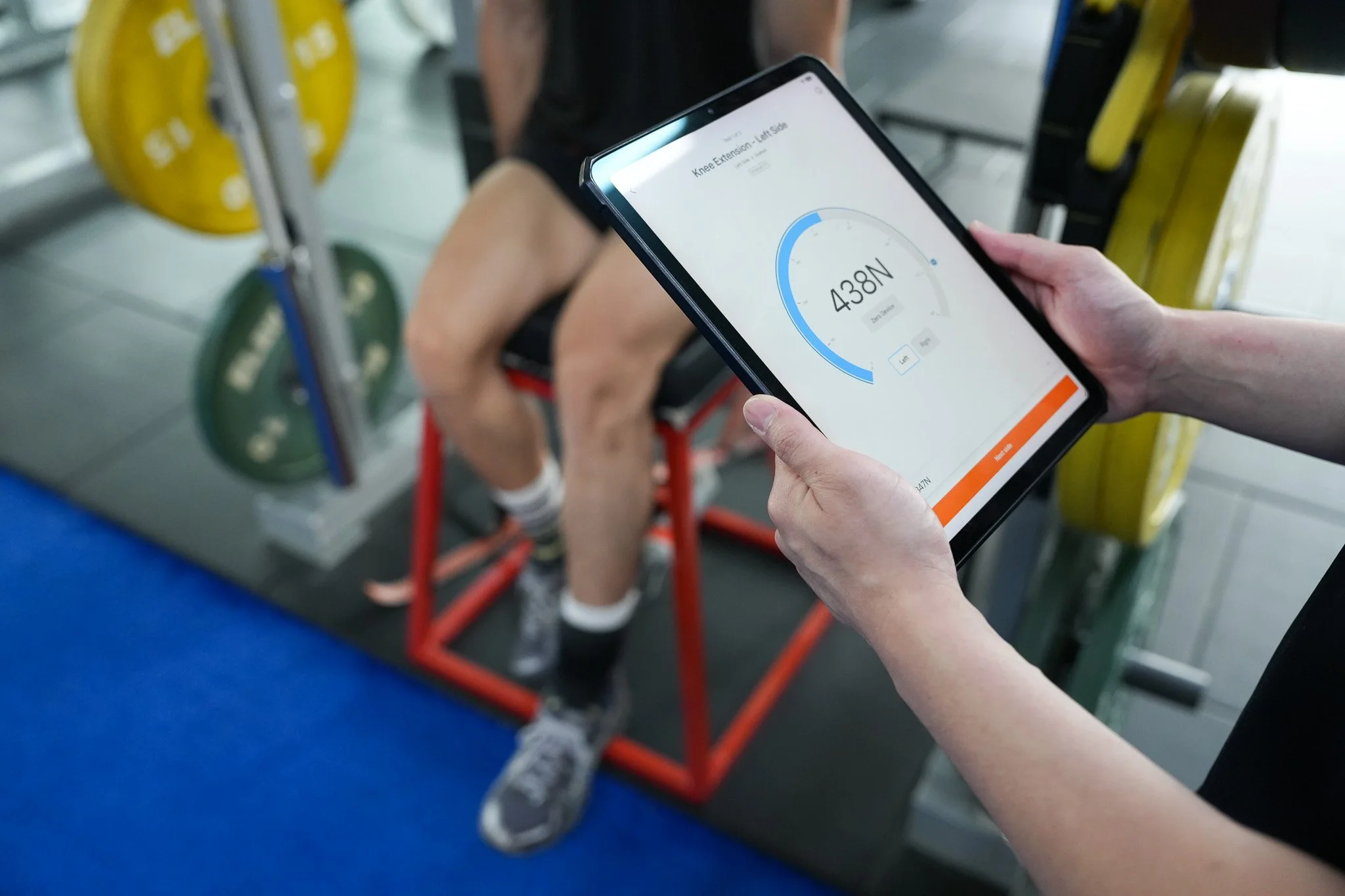
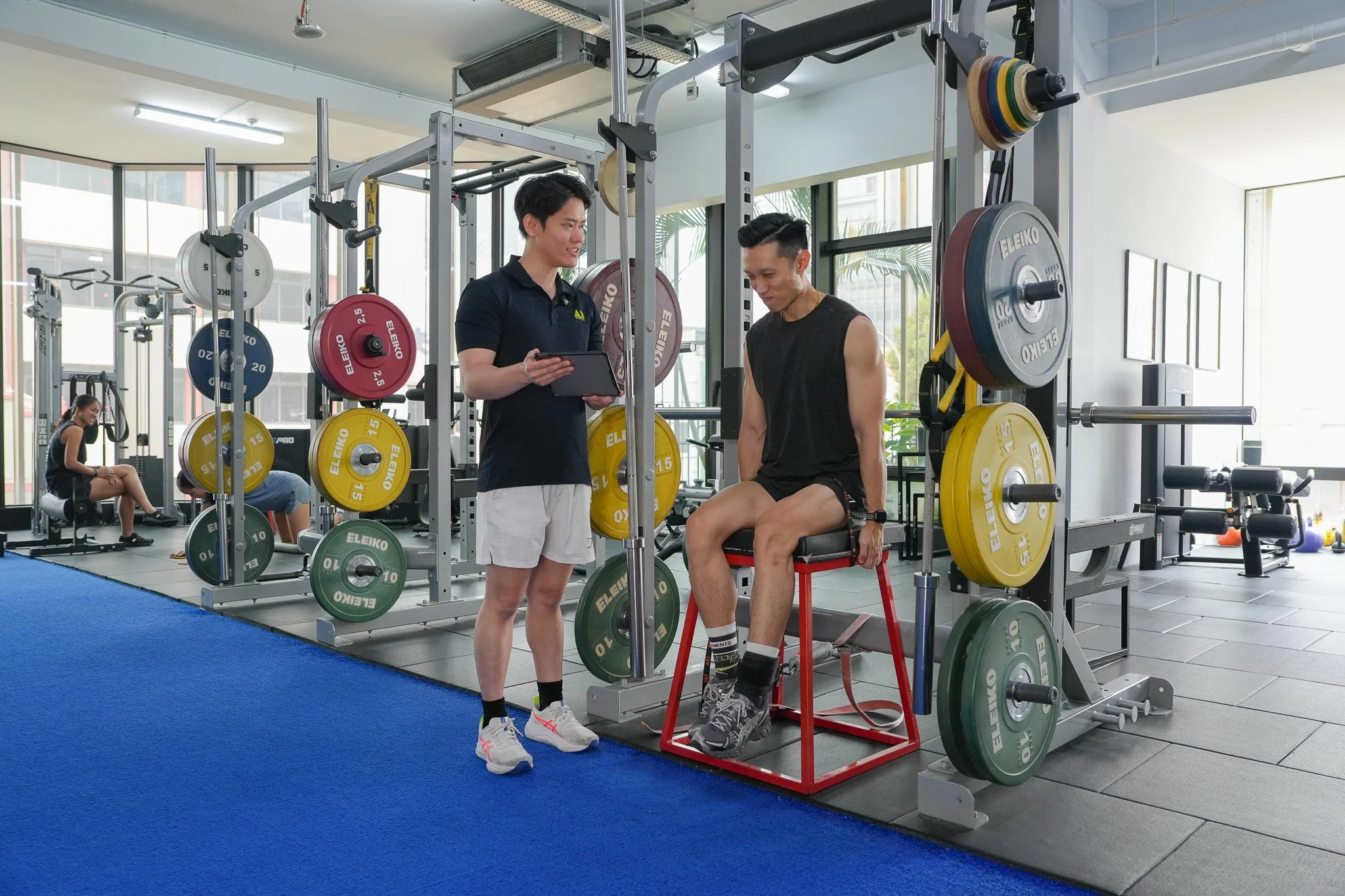
You can feel strong in your knee and still fall short on measured strength. Testing takes the guesswork out, so we can track your progress and catch gaps that are easy to miss by feel alone.
At Athletic Inc, we use a handheld dynamometer (VALD DynaMo) to measure leg strength and force plates (VALD ForceDecks) to measure how you jump and land. These show us differences between your legs and complement the measures suggested in ACL rehab guidelines [3].
That said, test results shouldn’t be the be-all and end-all. You might score well on a strength test but still struggle with impact. And your body is good at compensating: you can jump well while quietly leaning on your stronger leg, which can hide a real weakness in the operated one.
Not sure where you are in your recovery? A physiotherapy assessment at Athletic Inc can show you exactly what’s ready and what still needs work before you start running.
4. Preparing Your Knee for Repeated Impact
A big part of starting to run again is whether your knee can take the repeated pounding. Every step asks your leg to absorb and produce force, and even a short run involves hundreds of ground contacts. Managing one hop or jump doesn’t mean your knee can handle continuous running, which is why we introduce impact gradually in rehab.
A typical progression might look like this:
Stage 1: Build strength. Squats, split squats, knee extensions, step-ups and calf raises rebuild the strength your knee relies on.
Stage 2: Controlled impact. Low-level jumping and landing exercises build confidence and control when absorbing force.
Stage 3: Repeated impact. Pogo jumps, repeated two-legged jumps and single-leg hopping gradually expose your legs to repeated loading.
Stage 4: Back to running. Once you meet the clinical and functional criteria, running is introduced gradually through a structured program.
This isn’t a rigid order for everyone. Some people start with short, supervised runs before moving on to harder hopping drills. What you do, how quickly you progress and when you start running should reflect your recovery, your symptoms and your surgeon’s precautions. The goal is to build the capacity for running first, rather than using running as the way to get ready for running.
5. What Should Your First Run Look Like?
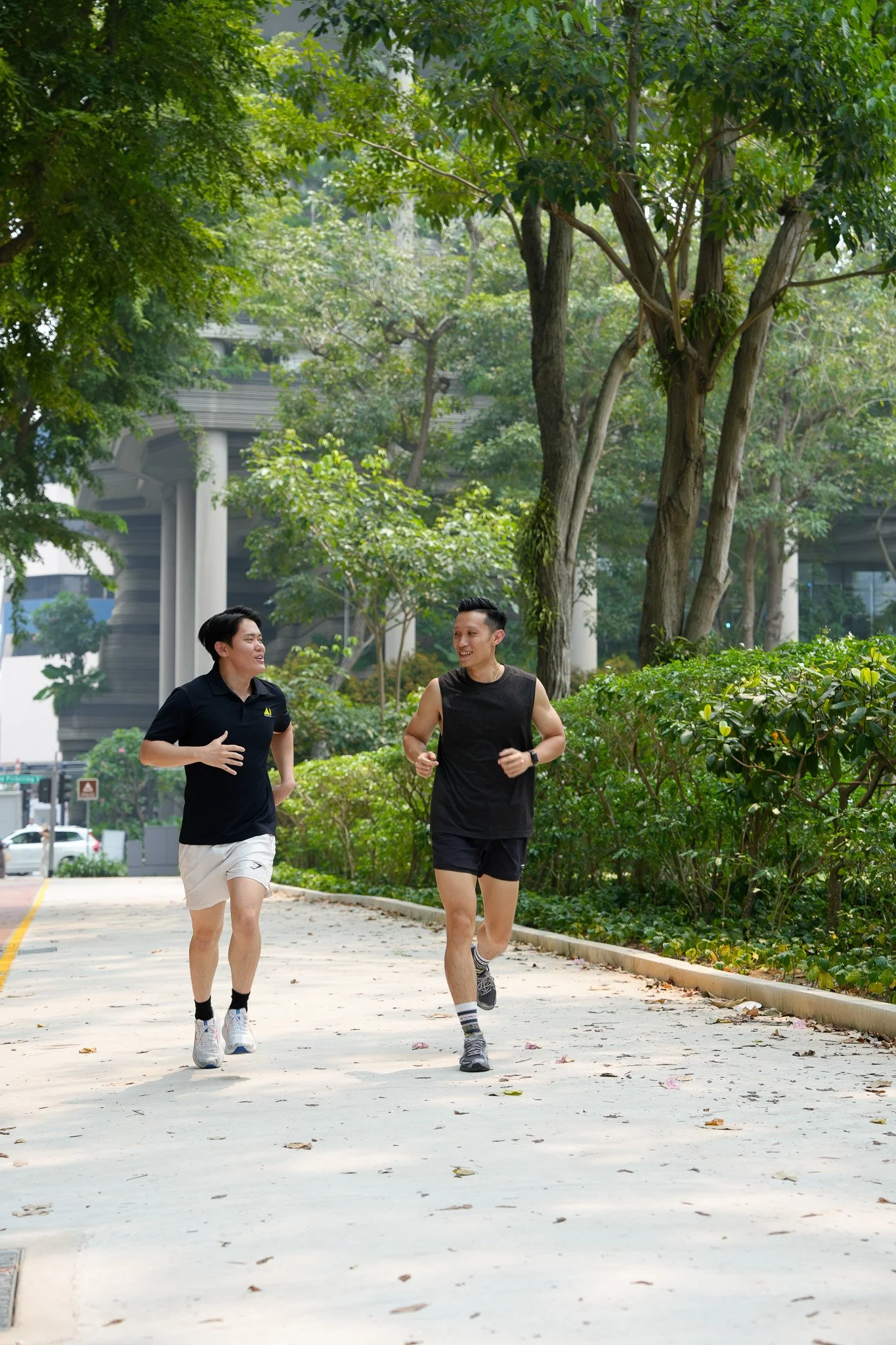
Once you meet the criteria above, running is introduced progressively so your knee has time to adapt.
So how much should you do? In the 2026 survey, clinicians commonly reported first runs of around 5–10 minutes or 500–1,000 metres, at a comfortable self-selected pace or about 8–10 km/h, often broken into intervals [2].
Treat these figures with caution: they describe what clinicians commonly do, not a proven prescription. Your starting dose should reflect your running background, your strength, your test results, your surgical history and how you respond to rehab.
After that, progress follows how your knee responds. Was there pain during the run? More swelling afterwards? Was your knee stiffer or sorer the next morning? A simple tool called the Activity Traffic Light can help you decide when to push on and when to back off [7].
Once you can run comfortably and consistently, you can build up duration, frequency and intensity gradually, one at a time rather than all together.
6. Running Is Not the Same as Returning to Sport
Getting back to running is a big milestone, but it doesn’t mean your ACL rehab is finished.
Running in a straight line is fairly predictable. Sports like football, basketball and rugby demand much more of your knee: sudden acceleration and braking, cutting, pivoting, jumping and landing. That’s why return-to-running and return-to-sport criteria shouldn’t be treated as the same thing [3,8]. The Aspetar guideline, for example, suggests stricter strength criteria for professional athletes going back to pivoting sports, and these are proposed for that specific group, not required for everyone.
No threshold guarantees protection against reinjury either. Return-to-sport decisions should also consider your overall physical performance, knee stability, mental readiness and what your sport demands.
After a successful return to running, rehab usually moves on to:
Strength and power: producing and absorbing bigger forces
Sprinting and acceleration: preparing for faster movement
Braking and changing direction: building control for cutting and pivoting
Advanced jumping drills: preparing for harder, more reactive tasks
Sport-specific conditioning: gradually rebuilding the demands of your sport
A recreational runner’s needs look different from those of someone heading back to competitive football, so your end goal should shape your rehab.
Returning to running is a checkpoint, not the finish line.
Getting Back to Running
Returning to running after ACL reconstruction isn’t just about reaching a certain week. It takes healing, a calm knee, strength, good movement and the ability to handle repeated loading.
So the question isn’t only “How long has it been since surgery?” but “Has my knee built the capacity that running demands?”
At ATHLETIC IC, we combine clinical assessment, objective strength and performance testing, and progressive rehab to help you understand where you are and work towards your running goals. Whether you’re recovering from ACL reconstruction or managing a running-related injury, a structured assessment can show you what to address before building your training back up.
Get assessed. Build your capacity. Return to running with confidence.
Contact ATHLETIC INC to book a physiotherapy assessment and talk through your return-to-running goals.
Don’t Just Train Hard. Train Right. At ATHLETIC INC, we focus on bridging the gap between rehabilitation, performance, and long-term athletic development.
MEET THE AUTHOR

FEDERIC LIM
Physiotherapist / Performance Coach
B.Sc. Physiotherapy (Hons)
Certified Strength and Conditioning Specialist (CSCS)
National Strength and Conditioning Association (NSCA)
GEMt Dry Needling Level 1
Advanced Sports Massage - International Sports Academy (ISA)
Fluent in English and Mandarin
SPECIALISATIONS
Sports and post-operative rehabilitation
Return-to-sport testing and athletic development
Strength and multidirectional speed development
Calisthenics and gymnastics-based strength
Physical performance for lifelong health
References
[1] Rambaud AJM, Ardern CL, Thoreux P, Regnaux JP, Edouard P. (2018). Criteria for return to running after anterior cruciate ligament reconstruction: A scoping review. British Journal of Sports Medicine, 52(22), 1437–1444. https://doi.org/10.1136/bjsports-2017-098602
[2] Butler BT, Kotsifaki R, Whiteley R, Palumbo C, Pairot de Fontenay B, Willy RW, King E. (2026). “Do As I Say, Not As I Do”: Clinician Return-to-Running Criteria, First-Run Characteristics, and Running Assessment Analysis After Anterior Cruciate Ligament Reconstruction Compared to the Literature—Insights From an International ACL Rehabilitation Conference. JOSPT Open, 4(3), 328–339. https://doi.org/10.2519/josptopen.2026.0195
[3] Kotsifaki R, et al. (2023). Aspetar clinical practice guideline on rehabilitation after anterior cruciate ligament reconstruction. British Journal of Sports Medicine, 57(9), 500–514. https://doi.org/10.1136/bjsports-2022-106158
[4] Wellsandt E, Failla MJ, Snyder-Mackler L. (2017). Limb Symmetry Indexes Can Overestimate Knee Function After Anterior Cruciate Ligament Injury. Journal of Orthopaedic & Sports Physical Therapy, 47(5), 334–338. https://doi.org/10.2519/jospt.2017.7285
[5] Pairot-de-Fontenay B, Willy RW, Elias ARC, Mizner RL, Dubé MO, Roy JS. (2019). Running Biomechanics in Individuals with Anterior Cruciate Ligament Reconstruction: A Systematic Review. Sports Medicine, 49(9), 1411–1424. https://doi.org/10.1007/s40279-019-01120-x
[6] Pairot de Fontenay B, Van Cant J, Gokeler A, Roy J-S. (2022). Reintroduction of running after anterior cruciate ligament reconstruction with a hamstrings graft: can we predict short-term success? Journal of Athletic Training, 57, 540–546. https://doi.org/10.4085/1062-6050-0407.21
[7] Shirley Ryan AbilityLab. Pain: Activity Traffic Light – A Guide to Movement Safe Pain [Internet]. Chicago (IL): Shirley Ryan AbilityLab; 2017 [cited 2026 Oct 13]. Available from: https://www.sralab.org/sites/default/files/2017-04/Pain%20Activity%20Traffic%20Light%202017.pdf
[8] Burgi CR, Peters S, Ardern CL, Magill JR, Gomez CD, Sylvain J, Reiman MP. (2019). Which criteria are used to clear patients to return to sport after primary ACL reconstruction? A scoping review. British Journal of Sports Medicine, 53(18), 1154–1161. https://doi.org/10.1136/bjsports-2018-099982
Disclaimer: This article is intended for general education and does not replace individual medical advice. Return-to-running decisions should be made with your treating healthcare team, taking into account the surgical procedure, associated injuries and individual recovery.