
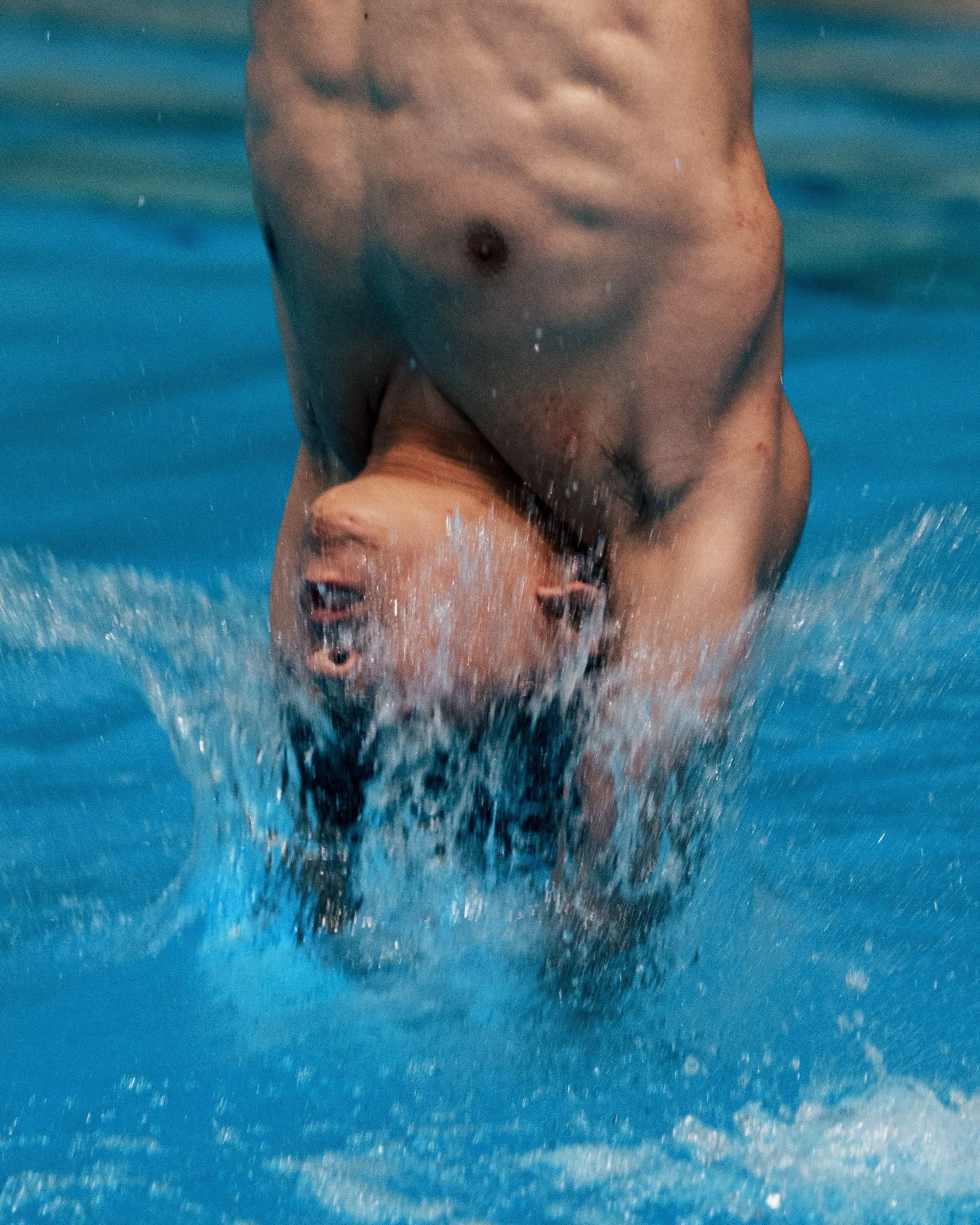
Most of us think about landing forces through the legs. In diving, the upper body meets the water first.
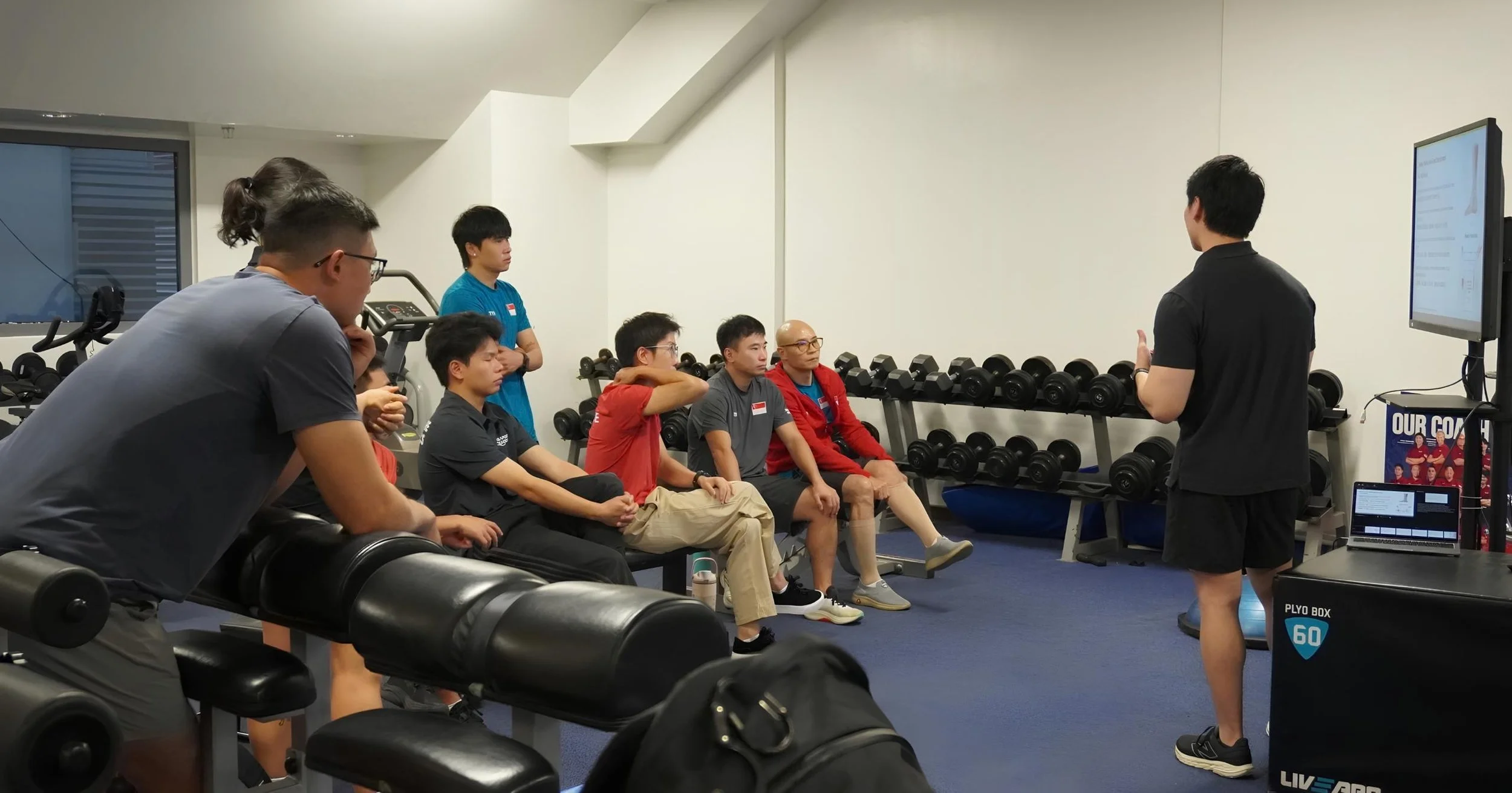
This month I presented to a room of diving coaches as part of the AQC coach education series on injury prevention and rehabilitation. This is Part 1 of three posts from that session. Part 2 covers how we test divers, and Part 3 covers load monitoring and returning to diving.
We started with one idea.
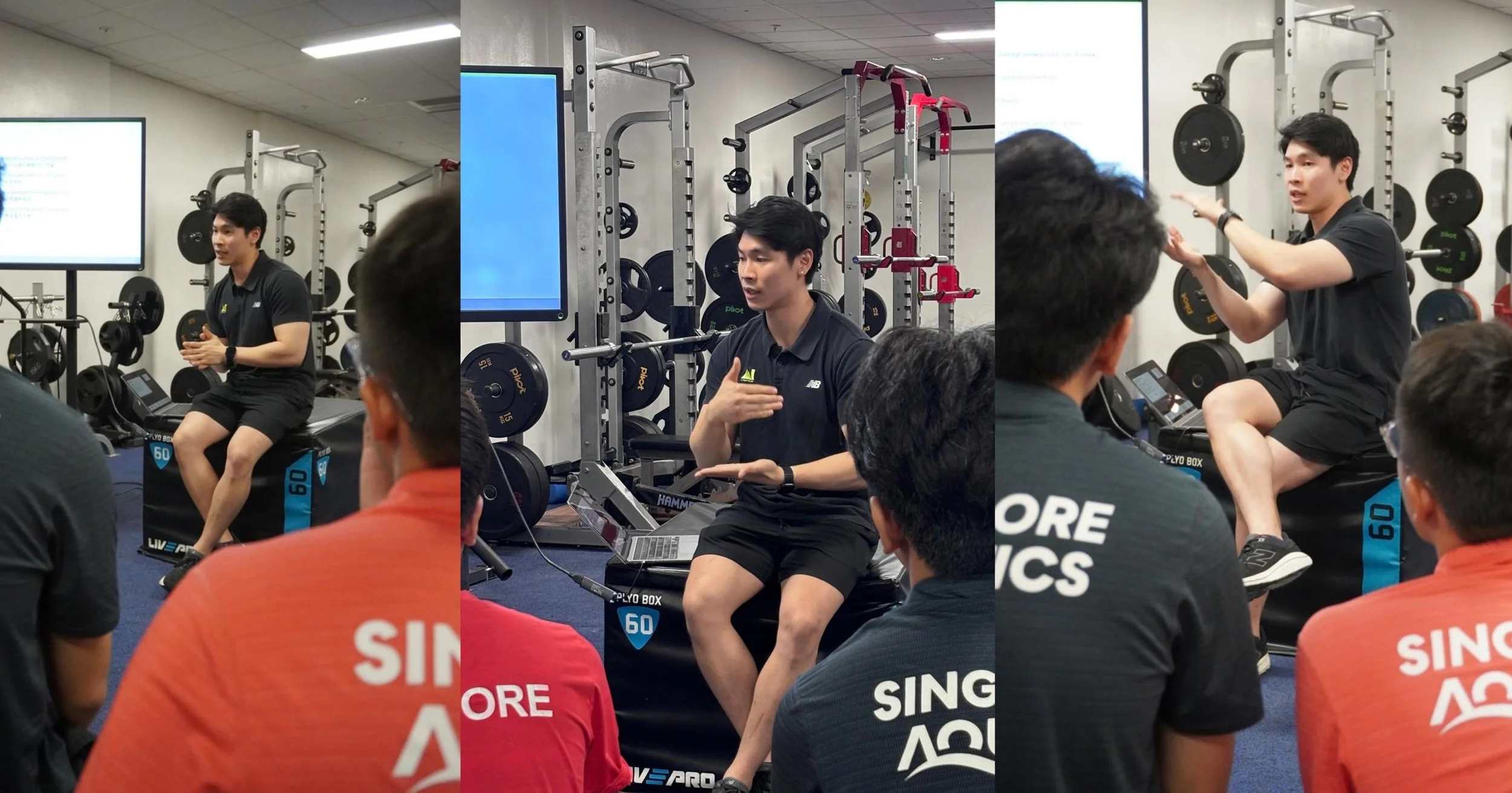
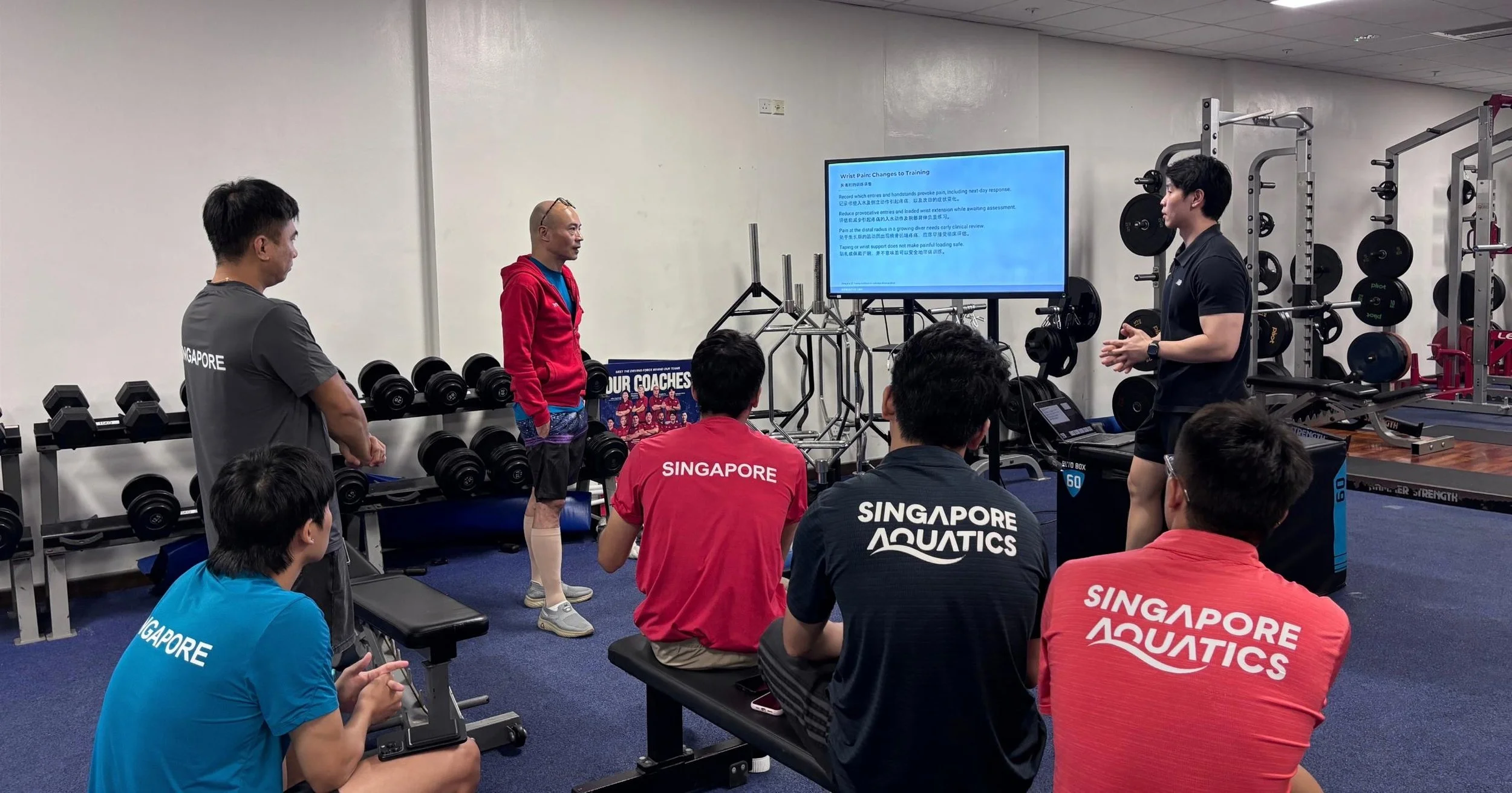
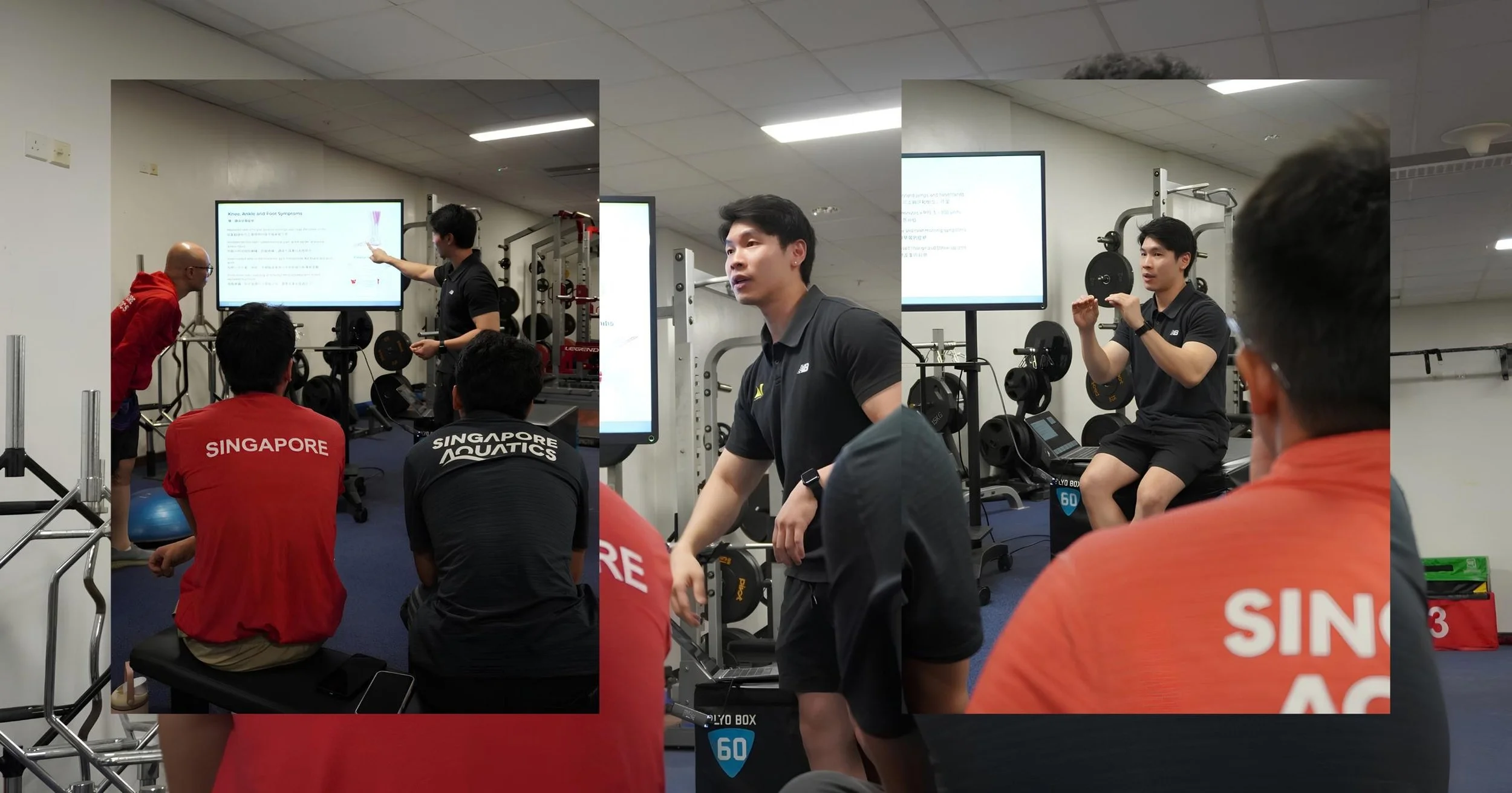
Think of Diving as a “Contact Sport” for the Upper Body
At hands-first entry, the water slows the diver very quickly. The hands, wrists and shoulders take the initial load, and that load can travel through the rest of the body.
So for conditioning purposes, it helps to think of water entry as repeated upper-body contact. A diver may do dozens of entries a session. Entry alignment and the sheer number of repetitions both influence how well the upper body tolerates it.
A caveat. “Contact sport” is a coaching analogy, not a formal classification, and it is not a claim that forces match rugby. Force depends on the entry and how it is measured, so we avoid quoting a single body-weight multiplier. A simple physics calculation does put a 10 m platform entry at roughly 50 km/h before the water is touched (v = √2gh, ignoring drag), which explains why entry is so demanding.
How Common Are Injuries in Diving?
A four-year study of an Australian national diving programme followed 63 divers and recorded 421 injuries. Annual injury prevalence was 70–85%, and two-thirds of injuries meant time away from training (Currie et al., 2024). A systematic review of 28 studies shows the same overall pattern: shoulder, lower back, trunk and wrist/hand are most frequently affected (Currie et al., 2025).
This is one national programme, so generalise carefully.
From Observation to Action: Building a Framework That Works
In that cohort:
• Lumbar spine: 18.3% of injuries, the most common site
• Wrist and hand: 11.6%
• Shoulder: 10.5%
• Neck: 8.8%
Springboard and platform differ. Platform divers had more wrist/hand, shoulder and upper-arm injuries. Springboard divers had more lower-limb injuries, and stress fractures caused the longest average time-loss (Currie et al., 2024).
The Number Coaches Should Remember
79.3% of injuries happened in training. Only 2.4% happened in competition (Currie et al., 2024).
These percentages don’t compare risk per hour, because divers train far more than they compete. But most of the exposure, and so most of the chance to change things, sits in training design. Prevention is not separate from performance training. It lives in how you plan the week.
Three Regions, Three Different Problems
The lower back. Repeated extension and rotation can overload the pars interarticularis, producing a bone stress injury that can progress to a stress fracture (spondylolysis). Persistent, focal back pain provoked by extension or rotation in a young diver deserves early assessment, not “rest it and see.” Diagnosis and imaging sit with a clinician. And plan in months, not weeks: in a systematic review of athletes with spondylolysis, conservative care returned 92% to sport at a mean of about 4.6 months (Grazina et al., 2019).
The shoulder. At entry, the shoulder is loaded overhead. Cuff pain, instability and labral injury are all on the differential. Diving-specific prevention evidence is thin, so we use frameworks like the 2022 Bern consensus (Schwank et al., 2022), which is not diving-specific, and check outcomes in our own athletes.
The wrist. An MRI study of 76 wrists in 38 adolescent divers found growth plate injury in 42.9% of painful wrists versus 11.8% of pain-free wrists (Zhang et al., 2023). Several scan findings also appeared in wrists with no symptoms, so we treat symptoms and function, not the scan in isolation. In young divers, the growth plate is a vulnerable link.
Final Takeaway
• Water entry loads the upper body like repeated contact. Entry alignment and repetition matter.
• The lower back, wrist/hand and shoulder carry most of the burden, and about 80% of injuries happen in training.
• Training design is your biggest prevention lever.
Next: In Part 2, we show how we test divers, and what those tests can and can’t tell you.
Train Hard. Train Right. At ATHLETIC INC, we bridge rehabilitation, performance and long-term athletic development for divers, swimmers and other aquatic athletes.
MEET THE AUTHOR

DEXTER KIN
Founder & Clinical Director
Lead Physiotherapist & Performance Coach
Team Singapore National Swimming Physiotherapist
Hangzhou 2022 Asian Games
World Aquatics Championships Doha 2024
SPECIALISATIONS
Strength & Conditioning
Sports massage, Manual Therapy and Dry Needling
Rehabilitation to Performance
Swim-Specific Screening & Performance Optimisation
References
1. Currie BM, Hetherington M, Waddington G, Brown NAT, Drew MK, Witchalls J, Toohey LA. Injury epidemiology in male and female competitive diving athletes: a four-year observational study. J Sci Med Sport. 2024;27(12):849-855.
2. Currie BM, Drew MK, Hetherington M, Waddington G, Brown NAT, Toohey LA. Diving into the health problems of competitive divers: a systematic review of injuries and illnesses in pre-elite and elite diving athletes. Sports Health. 2025. doi:10.1177/19417381241255329
3. Grazina R, Andrade R, Santos FL, Marinhas J, Pereira R, Bastos R, Espregueira-Mendes J. Return to play after conservative and surgical treatment in athletes with spondylolysis: a systematic review. Phys Ther Sport. 2019.
4. Schwank A, Blazey P, Asker M, et al. 2022 Bern Consensus Statement on shoulder injury prevention, rehabilitation, and return to sport for athletes at all participation levels. J Orthop Sports Phys Ther. 2022;52(1):11-28. doi:10.2519/jospt.2022.10952
5. Zhang C, Shen S, Qiu L, Wang L, Zeng X, Zhou Q. Overuse wrist injuries in adolescent platform and springboard divers. Res Sports Med. 2023;31(3):273-284. doi:10.1080/15438627.2021.1966009