Rebuilding Stability, Power & Confidence from Surgery to Sport
What Are Post-Operative Knee Ligament Injuries?
Knee ligament injuries — such as tears of the ACL (anterior cruciate ligament), PCL, MCL, or LCL — often require surgical reconstruction to restore joint stability.
Post-surgery, the knee undergoes a period of weakness, stiffness, and loss of coordination.
Without structured rehabilitation, athletes risk incomplete recovery, persistent instability, or re-injury.
These surgeries are common among soccer, rugby, basketball, skiing, and combat-sport athletes, as well as active adults who sustain rotational or high-impact knee trauma.
Why It Happens
Ligament reconstruction typically follows an acute injury where the knee was forced into rotation or hyper-extension.
Contributing factors include:
Sudden change in direction or deceleration on a planted leg
Collision or awkward landing
Poor neuromuscular control or muscle imbalance
Fatigue-related instability or inadequate warm-up
Previous ligament injury without full rehab
After surgery, muscle inhibition, pain, and swelling alter movement patterns, making high-quality physiotherapy essential for safe and complete recovery.
Typical Post-Surgery Challenges
Swelling and stiffness limiting knee flexion and extension
Weakness of quadriceps, hamstrings, and hip stabilisers
Poor balance and confidence on the operated leg
Asymmetrical gait or compensation through the opposite limb
Fear of re-injury when returning to cutting, jumping, or contact sport
How Physiotherapy Helps
At ATHLETIC INC, post-operative knee rehabilitation is data-driven and performance-focused.
We work closely with your surgeon’s protocol while tailoring each stage to your unique progress.
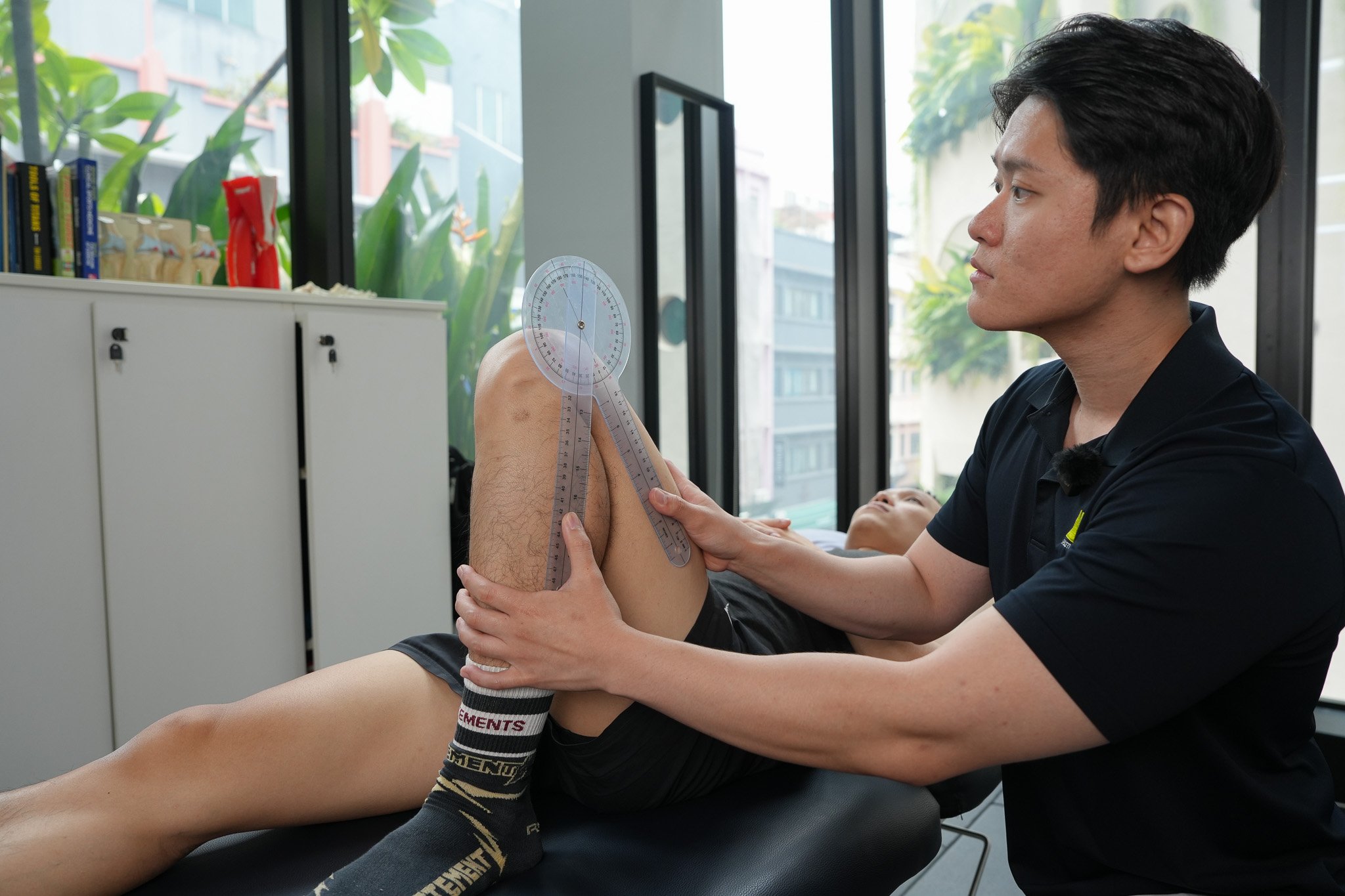
Comprehensive Assessment Includes
Range-of-motion & swelling evaluation
VALD ForceDecks for symmetry and power output
VALD dynamometry for isometric strength testing
Functional movement screening (squat, lunge, hop, balance)
Video feedback via HumanTrak 3D for gait and alignment
This allows us to target deficits early and track measurable improvement week by week.
Phases of Rehabilitation
1️ Protection & Mobility Phase (0 – 6 weeks)
Focus: Pain, swelling, and range of motion
Gentle manual therapy and passive mobilisations
Early quadriceps and hamstring activation (isometric drills)
Gait retraining and use of assistive devices as required
Education on wound care and safe movement strategies
2️ Strength & Control Phase (6 – 12 weeks)
Focus: Muscle rebuilding and stability
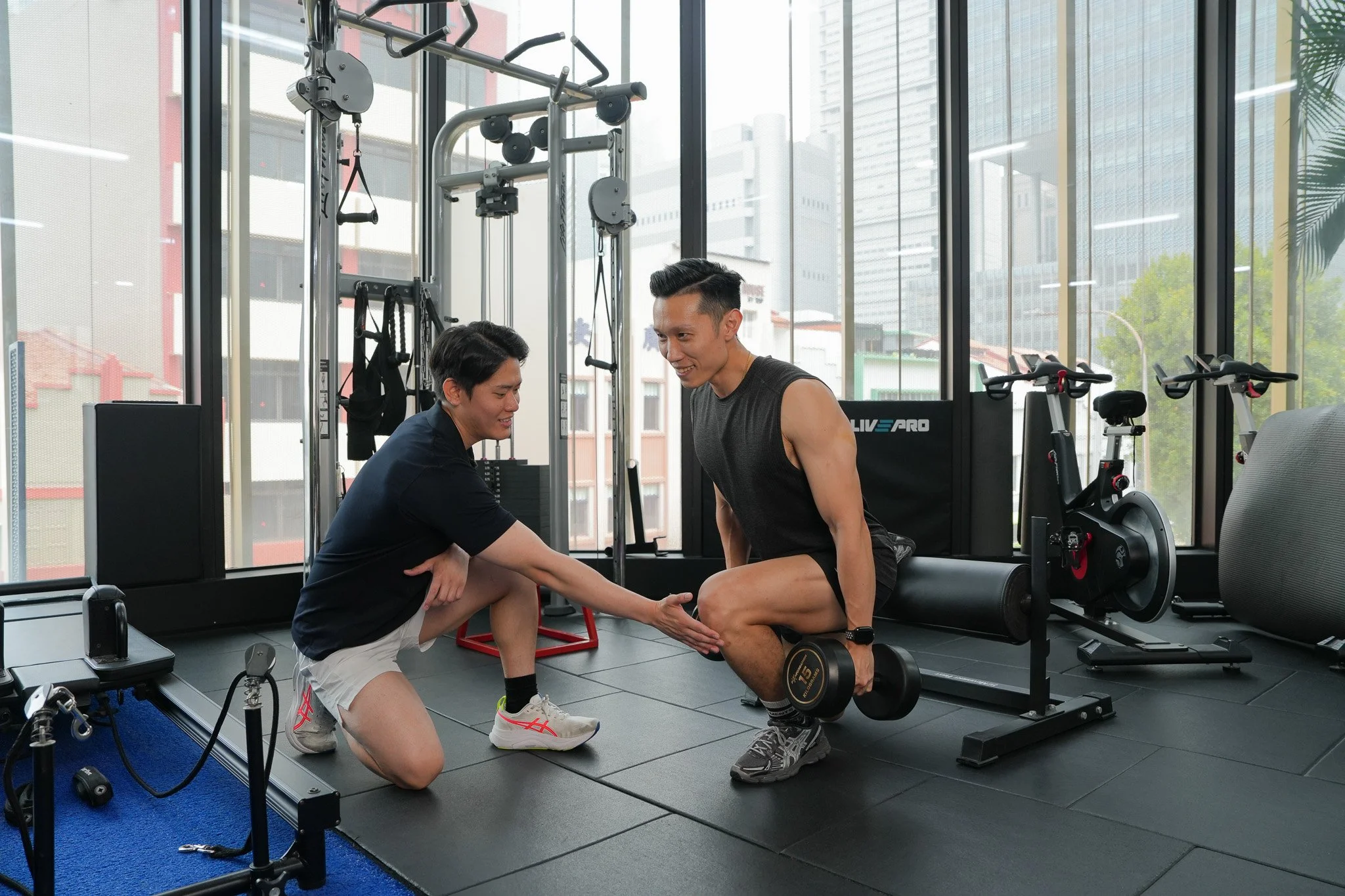
Progressive resistance training for quads, hamstrings, glutes
Closed-chain kinetic exercises to restore functional strength
Balance and proprioception work using VALD metrics
Core strengthening for trunk–hip–knee alignment
3️ Power & Dynamic Phase (3 – 6 months)
Focus: Force production and movement efficiency
Plyometric and agility drills with load control
Jump-landing mechanics and deceleration training
Single-leg strength and asymmetry correction
Early sport-specific drills (cutting, direction change, linear acceleration)
4️ Return-to-Sport Phase (6 – 9 + months)
Focus: Confidence and performance readiness
Objective clearance testing ≥ 90 % limb symmetry
Hop, jump, and sprint assessments on ForceDecks
Cognitive and reactive agility work to mimic match scenarios
Load-monitoring collaboration with your coach or club
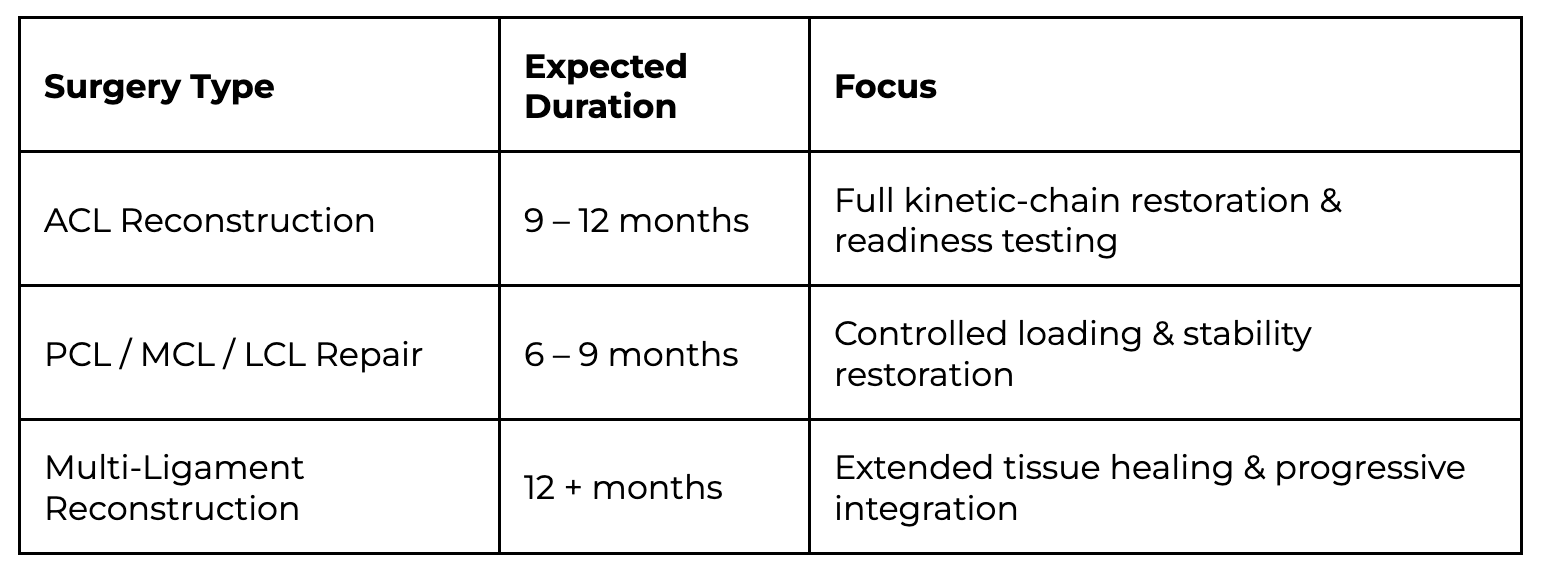
Typical Recovery Timelines
Surgery Type
Our Approach at ATHLETIC INC
We bridge the gap between medical rehab and athletic performance through an integrated model:
Evidence-based protocols aligned with your surgeon
Objective data tracking using VALD& HumanTrak
S&C integration for progressive load and power development
On-field or gym-based transition programs before full clearance
Education & prevention strategies for long-term joint protection
Every phase is goal-oriented, measurable, and customised for your sport — from amateur recreation to elite competition.
Expected Outcomes
Pain-free full range of motion
Restored quadriceps/hamstring strength ≥ 90 % of opposite limb
Stable single-leg balance and landing control
Improved acceleration, deceleration, and agility metrics
Confidence and clearance for unrestricted return to sport
Book Your Post-Operative Knee Rehab Assessment
Recovering from ligament surgery?
Our physiotherapists and performance coaches will guide you safely from your first steps after surgery to your first game back.
Let’s rebuild your knee — stronger, faster, and more resilient.
Our Approach at ATHLETIC INC
We don’t separate injury rehab from performance training — we connect them.
Our integrated pathway includes:
Data-driven testing (VALD / HumanTrak)
Manual therapy, dry needling & soft-tissue work
Individualised load management with your coach
Strength & Conditioning crossover to prevent recurrence