What Are Golf-Related Injuries?
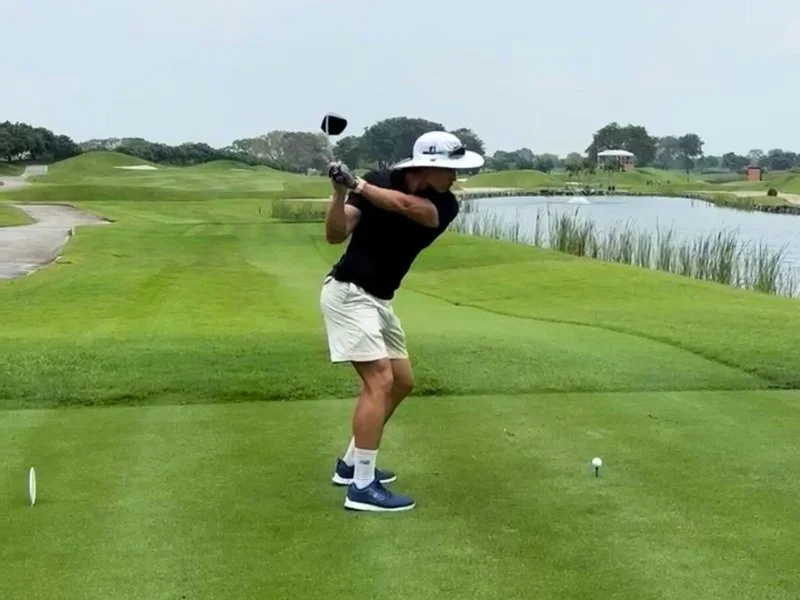
Golf may look smooth and low-impact, but the repetitive rotational forces placed on the spine, hips, and neck can lead to chronic pain and loss of swing efficiency.
The most common patterns we see in right-handed golfers are:
Right-sided Low Back Pain – from repeated right rotation and extension.
Neck Tightness or Pain – from poor posture and limited thoracic rotation.
Left Hip Pain – from excessive torque and deceleration forces during follow-through.
Even recreational players who spend hours at the range or sit long hours at work are at high risk of these issues — especially when mobility, core control, or swing mechanics break down.
Why It Happens
Golf is a rotational sport that requires the body to generate power from the ground up while maintaining stability through the core.
When certain links in that chain are weak or restricted, compensations occur.
Common contributing factors:
Limited Thoracic Rotation → forces lumbar spine to twist excessively.
Poor Core Control → increased shear forces on the right lower back.
Restricted Lead (Left) Hip Mobility → reduces follow-through and increases torque on the spine.
Weak Glutes & Obliques → limits force transfer and deceleration control.
Forward-Head & Rounded Posture → strains neck muscles during setup and rotation.
Over time, these imbalances lead to micro-strain of spinal joints, muscular tension, and cumulative overload — often presenting as stiffness after play, soreness when standing, or pain when finishing a swing.
Typical Signs & Symptoms
Right lower back ache during or after rounds
Stiffness or discomfort turning through the ball
Neck tightness, especially after long practice sessions
Pain in the left hip during follow-through or walking the course
Decreased swing distance and power
“Locking” sensation during trunk rotation
How Physiotherapy Helps
Physiotherapy identifies which links in your kinetic chain are restricted or overloaded, then builds a personalised plan to restore balance, mobility, and strength.
At ATHLETIC INC, our golf rehabilitation begins with a Movement & Swing Assessment that integrates technology and sport-specific expertise.
We assess:
Thoracic and hip rotation range (HumanTrak 3D analysis)
Core endurance and spinal stability
Force symmetry using VALD ForceDecks
Gluteal and oblique activation strength
Functional movement patterns specific to your swing plane
This data allows us to pinpoint the true source of your pain — not just the symptoms.
Phases of Rehabilitation
1️ Pain & Mobility Phase
Manual therapy to release tight thoracolumbar fascia, hip flexors, and neck muscles
Dry needling and spinal mobilisation to relieve discomfort
Gentle mobility drills for thoracic spine and hips
Posture reset strategies for daily and golf setup positions
2️ Strength & Control Phase
Deep core activation (multifidus, obliques, glutes)
Anti-rotation and rotation-control exercises (Pallof press, cable rotations)
Hip mobility and glute strength re-education
Neck and scapular stability for posture endurance
3️ Performance & Swing Integration
VALD-guided rotational power training (medicine ball throws, resisted rotations)
Movement retraining with swing drills to improve kinematic sequencing
Gradual load reintroduction with S&C team — simulating range-to-course transition
Endurance conditioning to sustain swing consistency
Expected Recovery Timeline
Mild strain or stiffness: 2–4 weeks of guided therapy
Recurrent or chronic pain: 6–10 weeks for mobility + strength restoration
Post-surgery or structural issues: variable, depending on imaging and surgical plan
Objective progress is tracked through:
Thoracic rotation angles (HumanTrak)
Hip internal/external rotation range
Core endurance and symmetry metrics
Our Approach at ATHLETIC INC
Golf rehab at ATHLETIC INC isn’t just about pain relief — it’s about restoring your swing performance potential. We integrate physiotherapy, S&C, and sport biomechanics under one roof.
Our process includes:
Movement-based analysis instead of isolated joint focus
TPI Screening
VALD testing for measurable progress
Swing-specific conditioning designed in collaboration with S&C coaches
Education on load management and warm-up protocols for long-term prevention
Whether you’re a club golfer, national amateur, or tour-level player, our goal is to get you back to the course with greater control, endurance, and rotational power than before.
Expected Outcome
By the end of your program, you can expect:
Reduced or resolved back, neck, and hip pain
Improved rotational mobility and core control
More efficient swing sequencing and power generation
Measurable gains in rotational strength and endurance
Book Your Golf Performance Assessment
Don’t let pain shorten your game.
Let’s fix the root cause, rebuild your body’s rotational control, and help you swing longer, stronger, and pain-free.
Our Approach at ATHLETIC INC
We don’t separate injury rehab from performance training — we connect them.
Our integrated pathway includes:
Data-driven testing (VALD / HumanTrak)
Manual therapy, dry needling & soft-tissue work
Individualised load management with your coach
Strength & Conditioning crossover to prevent recurrence