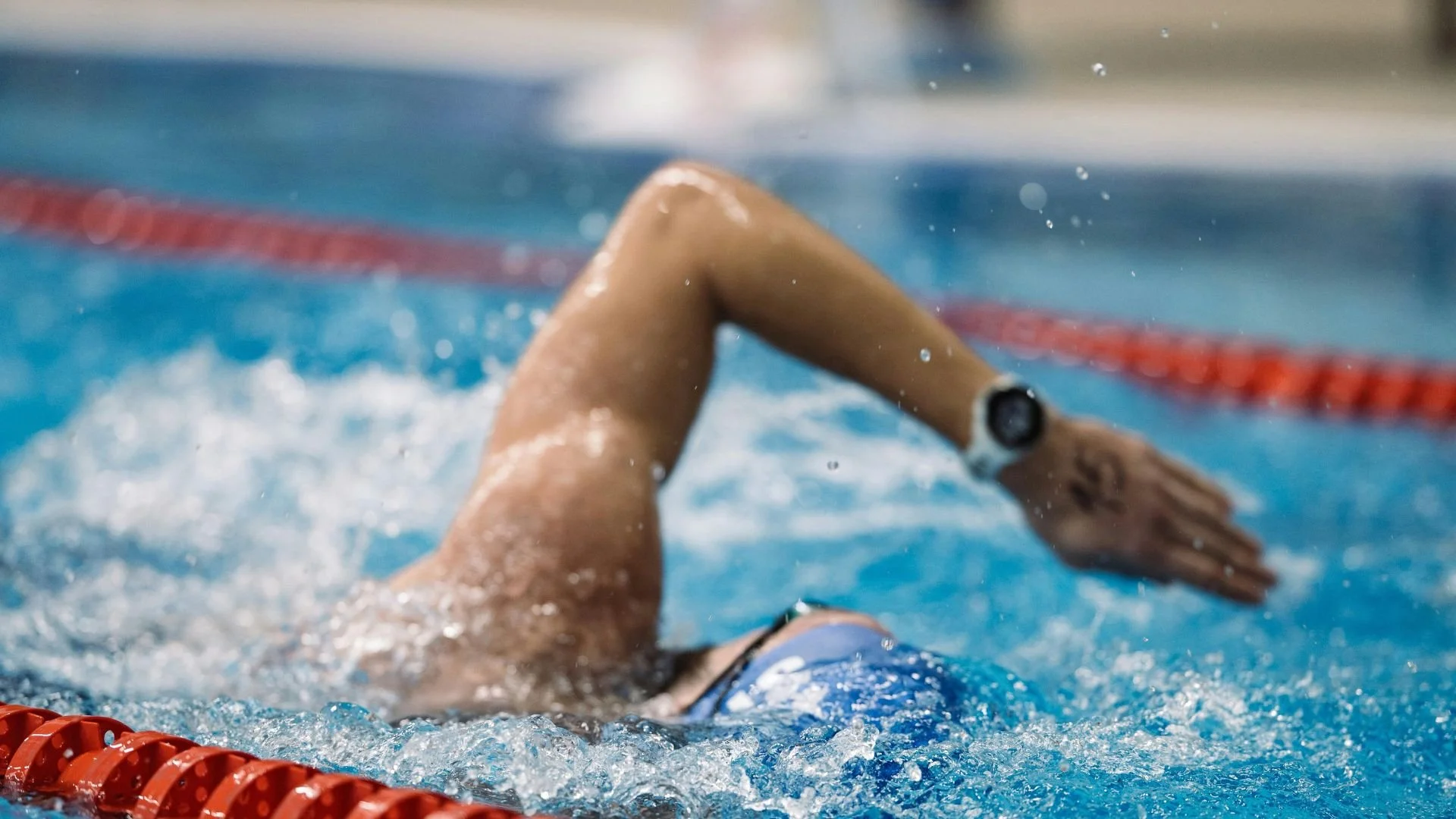
Rebuilding Power, Stability & Confidence in Every Stroke
What Is It?
“Swimmer’s Shoulder” refers to pain or irritation around the rotator cuff and shoulder joint capsule caused by repetitive overhead loading — most commonly seen in competitive swimmers, badminton players, and overhead athletes.
These injuries can involve:
Rotator Cuff Tendinopathy – overload and inflammation of the stabilising muscles.
Labral Tears (SLAP / Bankart) – injury to the shoulder’s cartilage rim that deepens the socket.
Impingement or Bursitis – irritation between the rotator cuff and bony structures.
Why It Happens
Swimmers complete thousands of arm revolutions per week, often in a posture of forward shoulder rotation and limited thoracic mobility.
Common contributing factors include:
Muscle imbalance between strong internal rotators (pecs/lats) and weak stabilisers (rotator cuff/lower traps).
Reduced scapular control or winging.
Fatigue and poor load management in training blocks.
Limited thoracic extension and trunk rotation.
Prior shoulder laxity or previous dislocation.
These factors combine to create micro-instability — small uncontrolled movements that over time lead to pain, clicking, or loss of stroke efficiency.
Typical Signs & Symptoms
Dull ache or sharp pain during freestyle or butterfly pull-through.
Pain reaching overhead or lying on the affected side.
Clicking or catching sensations.
Loss of power or endurance late in sets.
Difficulty maintaining streamline position due to scapular fatigue.
How Physiotherapy Helps
Effective management must restore both tissue capacity and movement control.
At ATHLETIC INC, your assessment starts with:
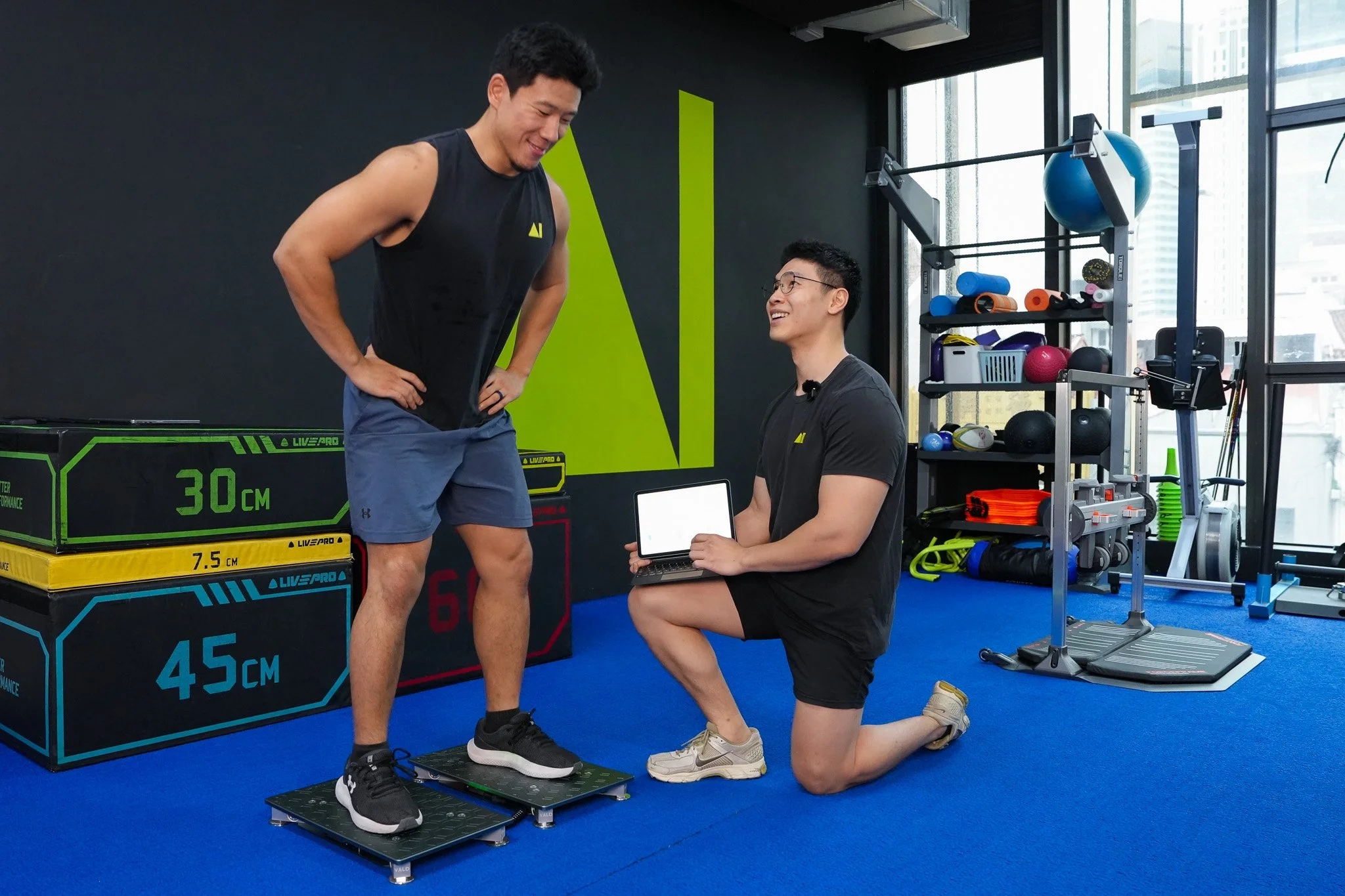
Movement Analysis – HumanTrak 3D system to assess posture, shoulder rhythm, and trunk rotation.
Strength Testing – VALD ForceDecks, dynamometry to quantify shoulder asymmetry and rotator-cuff endurance.
Load Review – training volume and stroke pattern analysis with your coach.
Rehabilitation Phases
1️ Pain & Control Phase
Manual therapy and soft-tissue release to reduce irritation.
Isometric and activation work for rotator cuff and scapular stabilisers.
Thoracic mobility drills to restore rib cage and spine movement.
2️ Strength & Stability Phase
Progressive resistance training — closed-chain stability, band work, and controlled external rotations.
Core and trunk integration to link shoulder motion with body roll.
3️ Power & Performance Phase
Force and endurance testing using VALD metrics.
Plyometric and overhead loading (medicine-ball throws, resisted swim cords).
Stroke-specific retraining with sport-specific positions.
Recovery Timeline
Mild tendinopathy: 4 – 6 weeks.
Moderate cuff/labral irritation: 8 – 12 weeks.
Post-surgery (repair / decompression): 16 – 24 weeks, depending on surgical protocol.
Return to full swimming or overhead sport is based on objective readiness tests — not just pain-free motion.
Our Approach at ATHLETIC INC
We don’t separate injury rehab from performance training — we connect them.
Our integrated pathway includes:
Data-driven testing (VALD / HumanTrak)
Manual therapy, dry needling & soft-tissue work
Individualised load management with your coach
Strength & Conditioning crossover to prevent recurrence
We work closely with Singapore Aquatics coaches, NTC athletes, and national-level swimmers, ensuring every athlete regains both control and confidence in the water.
Expected Outcome
Pain-free overhead range of motion
≥ 90 % rotator-cuff strength symmetry
Improved scapular endurance & thoracic mobility
Full return to stroke efficiency and competition readiness
Book Your Shoulder Performance Assessment
Don’t wait for shoulder pain to become a season-ender.
Our physiotherapists and performance coaches will help you rebuild the strength, mobility, and power your stroke deserves.